The Monastery of 40 Saints above Saranda
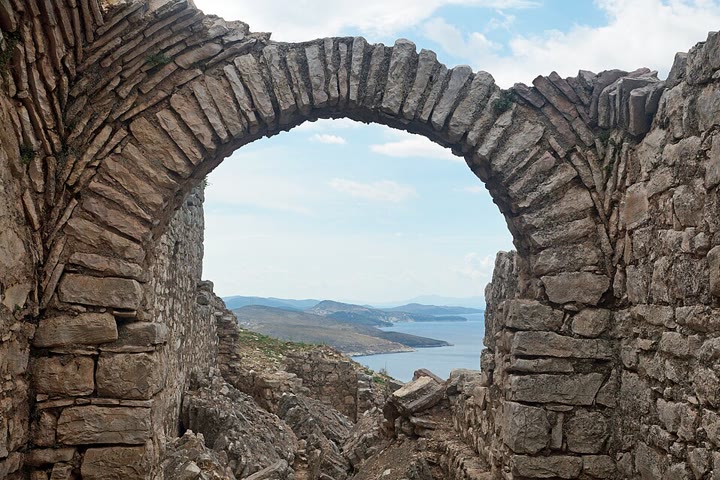
Most people come to Saranda for the sea and never realise the town's name is hiding on the hill above it. The Monastery of 40 Saints (Manastiri i Dyzet Shenjtorëve) is the early-Christian site that Saranda is actually named after — in Greek Agioi Saranta, meaning "Forty Saints".
It's a quiet, slightly off-beat stop. No crowds, no big ticket gates — just stone ruins, a sweeping view over the bay, and a slice of history older than almost anything else you'll see in this part of Albania. From our apartment it's an easy walk or a short taxi ride, and it folds nicely into an ordinary day by the sea.
Where Saranda got its name
The monastery was dedicated to the Forty Martyrs of Sebaste — in Greek Agioi Saranta, the "Forty Saints". Over time that name passed from the monastery down to the town below, turning the old ancient port into today's Saranda. Standing among the ruins, you're really looking at the town's birth certificate.
A little history
The site was founded in the 6th century under the Byzantine emperor Justinian and was an important pilgrimage place along this coast for close to a thousand years. After centuries of decline and repair it was badly damaged in the Second World War, and during the communist era the hill was turned into a military post — which is why only ruins remain.
What you'll see
The former basilica survives as outer walls, apses and vaulted spaces; the western end holds a crypt, with a row of small underground chapels beneath. Traces of old wall paintings remain in places. It isn't a polished attraction — it's raw, and all the more genuine for it, the kind of place where you can put your hands on the history.
The view that earns it
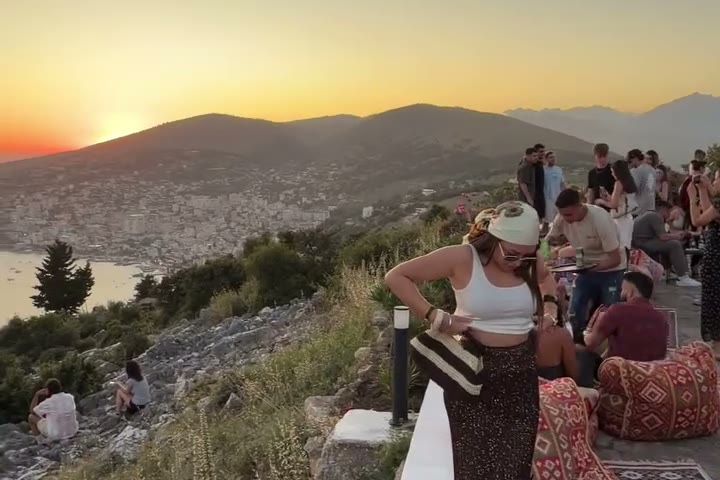
The real reward is the panorama. From the hill you look straight down over Saranda, out to the Greek island of Corfu on the horizon, and south along the coast towards Ksamil. Morning light is best if you want the town itself lit, with the sun on Saranda's rooftops.
How to get there
The monastery sits on the hill east of and above the town, roughly 2–4 km from the centre. On foot it's about a 45-minute uphill walk; easier is a short taxi ride (very roughly 300–500 lek) and the last few hundred metres on foot. Bring water and sturdier shoes.
Our tip as a base
From our apartment you can head up easily straight after breakfast: the beach is just behind the house, so you can pair a morning swim with a late-morning climb to the monastery before the heat builds. It's a low-key extra half-hour that often sticks in the memory more than the main beach.
FAQ
Is there an entrance fee for the monastery?
In season there's usually a small symbolic fee (very roughly around 200 lek) during daytime hours. Outside opening times, especially early in the morning, the site is often freely accessible. Both prices and times change, so treat them as approximate.
Can you walk to the monastery from the centre?
Yes. It's about a 45-minute uphill walk from town along the road. The climb is fairly steep, so in summer it's worth going in the morning, taking water, and setting off before the worst of the heat.
Is it worth it with kids or as a quick stop?
Yes, easily. Seeing the ruins and the view takes roughly half an hour to an hour, so it slots neatly into an ordinary beach day as a quieter, less touristy stop.